I arrived at MIT as most students there do—intellectually curious and analytically minded. But during my senior year, I was introduced to something that would change everything: a mathematical system that could beat the casinos at their own game.
I was hooked—not by gambling, but by the challenge of mastering the system, executing it flawlessly at the tables, and flying under the casinos’ radar.
What started as a fascination became an obsession. And that obsession led me to join a team that would make history—the MIT Blackjack Team.
Beating Vegas for MIllions
The MIT Blackjack Team wasn’t about luck—it was an unusual venture turned sophisticated operation built on mathematics, teamwork, and relentless practice. We had a coordinated team strategy with specific roles as big players and spotters. We viewed our bankroll as an investment—essentially a hedge fund that we quickly grew to seven figures.
I became one of the team’s most successful players, and a team captain. Once we had all our pieces in place, we went on an incredible run. We moved through casinos like a well-oiled machine, winning trip after trip. We had flipped the odds on the casinos and we became the house.
the casinos strike back
But casinos aren’t in the business of losing. As our success and bankroll grew, so did their countermeasures. We became enemy #1. They started tracking us, photographing us, and sharing our information across properties nationwide. That’s when the cat & mouse game really heated up. With each passing year, it became more challenging to play and we had to continuously adapt to the casinos’ countermeasures.
And Griffin Investigations was a big reason why.
Ultimately, we became victims of our own success. We had not broken the law but we had defied the odds and won too much and too consistently. After an amazing 7 year run, all of our key players became persona non grata in the casino world. When your face ends up in a surveillance database shared by casinos worldwide, your playing career is over. I had reached the top—and hit the ceiling. The casinos had shut me out. As painful as it was, I knew it was time to walk away from the game that I loved and had mastered.
A brand New Chapter
After being forced to retire from professional blackjack, it was time for me to begin a brand new chapter in my life. I had always been interested in working with youth so I started volunteering for the Making a Difference Foundation, tutoring high school students with a focus on the SAT. I quickly realized that I loved teaching.
Soon after, I started my own after-school program in the Washington DC area with the mission of helping young people from immigrant families become the first in their families to achieve higher education. I found the work incredibly meaningful and fulfilling. I had left the MIT Blackjack Team chapter behind. But once again, fate would pull me back into the game, albeit, in a much different way.
THE BOOK THAT CHANGED EVERYTHING
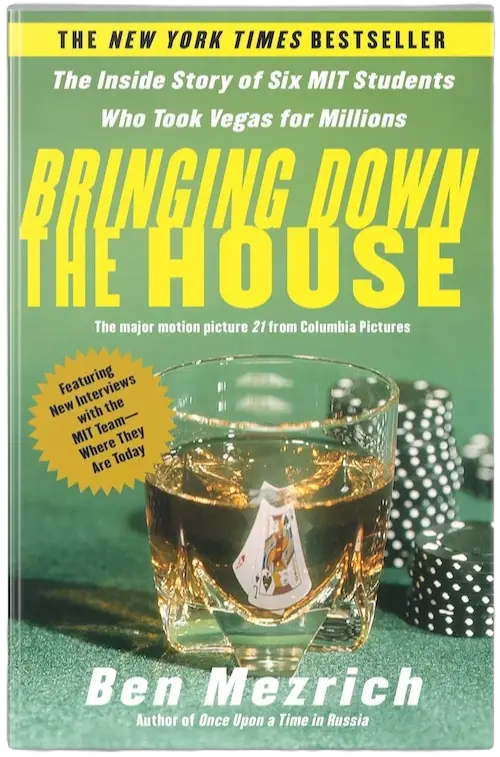
The story of the MIT Blackjack Team was suddenly made public and brought to millions of readers worldwide when Ben Mezrich’s book, Bringing Down The House, became a New York Times bestseller.
The book opened doors I never anticipated: speaking engagements, requests for private coaching, and business consulting opportunities. What had started as an unorthodox experiment in college had become the foundation for a brand new career helping others master strategic thinking and gain a competitive advantage, whether at the blackjack tables or in the business world.
My Return to Blackjack
After the book came out, I got an opportunity I couldn’t pass up: an invitation to compete in the first ever World Series of Blackjack against the best players in the world. It was held at the Mohegan Sun in Connecticut, and not only was I able to make my return to the blackjack tables, but for the first time in a long while I was actually welcomed to play.
It was a special weekend. I got to meet and compete against a field of blackjack pros and luminaries such as Stanford Wong, Anthony Curtis and James Grosjean. And as fate would have it, the cards broke my way and I made it to the final table where I won the championship in a nerve-racking finish over Hollywood Dave Stann, which came down to the last card dealt.
from casinos to board rooms
The same principles that powered the MIT Team’s success translated perfectly to challenges in the business world. I launched a data science consulting practice, helping companies apply advantage player thinking to customer insights, market analysis, and strategic decision-making.
As consulting demand grew, I formalized the operation: Nu Edge Intelligence, a boutique data science consultancy. We help organizations cut through the noise to identify the variables that truly matter for their specific goals. We quantify this data to provide actionable intelligence and a competitive advantage for our clients.
Hollywood comes calling
In 2008, the story of the MIT Blackjack Team reached its widest audience yet with the release of 21, a major motion picture starring Kevin Spacey and Jim Sturgess. The movie took major creative liberties, but the essence—a team of MIT students using math and teamwork to outsmart the casinos—captured people’s imagination worldwide.
Suddenly, our story wasn’t just a book. It was a cultural touchstone—not only for anyone who’s ever gambled, but for everyone who’s ever dreamed of beating the system. People around the world knew about the MIT Blackjack Team, and I became part of that legacy.
THE NEXT CHAPTER
We’re currently in post-production on House Breakers, a feature-length documentary exploring how advantage players have gained an edge across different games and systems—from blackjack to poker to the world of professional sports.
I’m also working to launch the World Blackjack Championship, creating the blackjack equivalent of the World Series of Poker. The mission is to elevate blackjack from casino floors to championship arenas—where anyone, from a complete novice to the best players in the world, can compete at the highest level.
Beyond entertainment, I’m focused on helping others develop the same strategic thinking that powered the MIT Team’s success. Through Nu Edge Intelligence, speaking engagements, and private coaching, I help organizations and individuals gain a competitive advantage through analytical precision and disciplined execution.
What started as a college experiment has become my life’s work. I’ve evolved from player to teacher, from team member to mentor, from card counter to strategist. I dedicated myself to mastering the game of 21 at a world class level. Now I help others become advantage players in whatever their game may be.